


New Season of Clause 8
Quick Clause 8 update: IP Copilot and Junior are joining as sponsors for the new season starting later this month.
There’s certainly no shortage of companies building AI tools for patents right now. What sets these two apart is where they came from. Junior grew out of patent lawyers and law-firm leaders with deep experience finding efficient ways to solve difficult patent problems for startups; IP Copilot was founded by prolific inventors who were working in AI long before the current boom.
I’ve known the founders for years and have long looked to them as go-to sources for understanding how AI can actually improve the patent process. I’m thrilled to have them as partners and look forward to sharing their stories and wisdom this season.
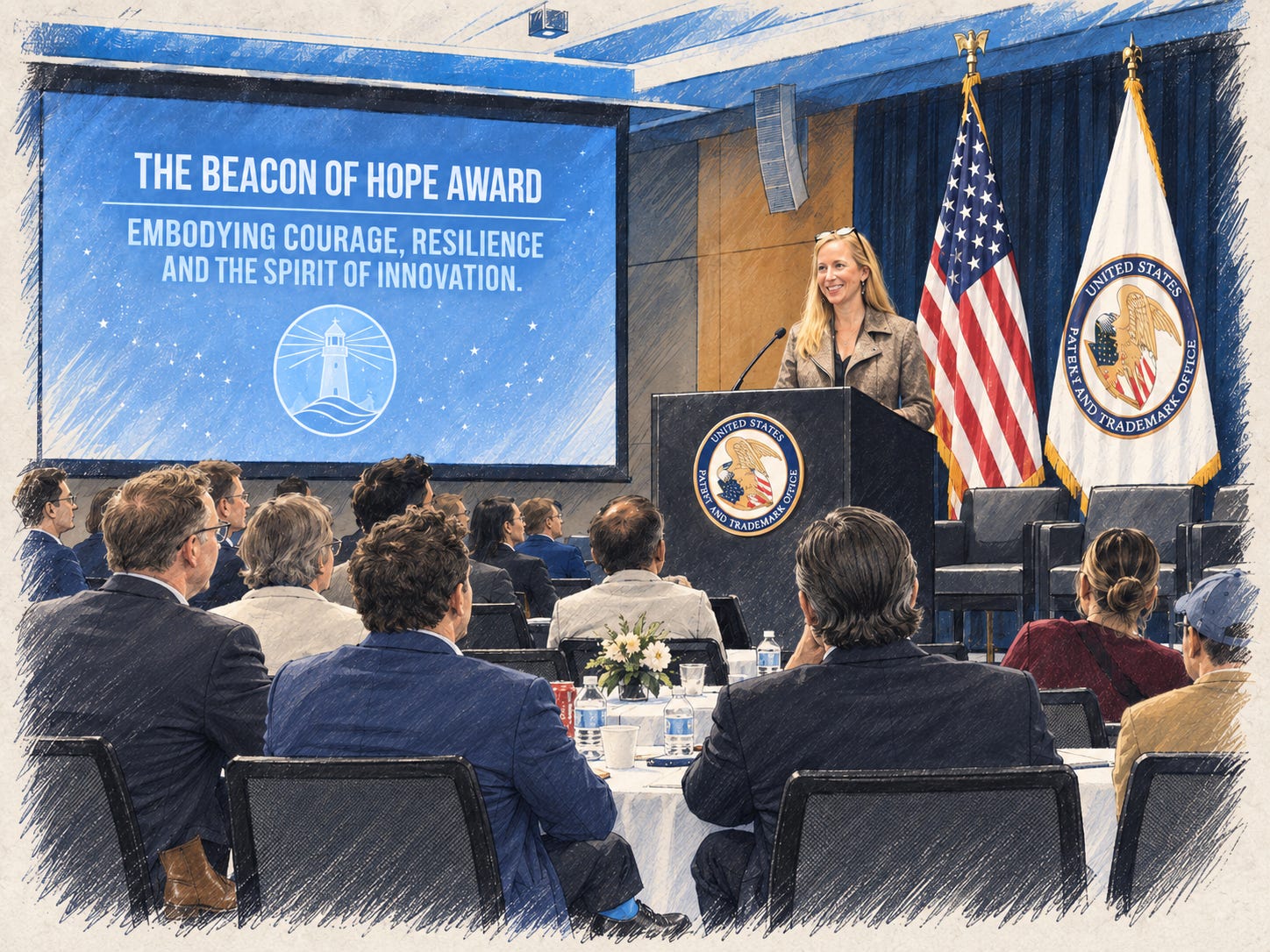
Stewart’s Playbook & Settled Expectations
When Coke Morgan Stewart was named acting director in January 2025, I laid out on Clause 8 what, at the time, struck me as a fairly straightforward prediction: Stewart would likely refocus the agency on examining patents and rein in post-grant proceedings at the PTAB.
The case wasn’t complicated. Stewart had over ten years of experience as a career service employee at the USPTO, including at the solicitor’s office and various roles in the front office. After that, she served as Deputy Attorney General in Virginia and became more involved in politics. Many previous heads of the USPTO stepped into the job without knowing how the place actually ran or how Washington worked, and almost no one had experience with both like Stewart did.
The rest of the argument came from Stewart. Five months earlier she’d published a piece on what IP policy might look like in a second Trump term: roll back the efforts to weaken and seize patent rights, take a hard look at how companies with endless resources use post-grant proceedings at the USPTO to repeatedly challenge issued patents, and give startups and independent inventors a fair shake.
She was then picked to take the top job at the USPTO right after inauguration, and proceeded to implement the playbook she described.
Most notably, she relied on “settled expectations” starting that June to end endless challenges of patents at the PTAB that were presumed to be valid. The AIA gives the Director discretion over institution and directs the Office, when prescribing IPR regulations, to consider the integrity of the patent system. The previous administration eagerly relied on that broad discretion to expand the ability to repeatedly challenge patents, even ones that were previously found to be valid by courts or even the PTAB itself. Her read was that a process built to catch clear errors had turned into one where any patent could be challenged indefinitely until it was finally invalidated.
“Coke was able to perform the job of the Director not merely in the sense of sitting in the chair, but in the sense of making and implementing policy decisions that changed the course of the agency . . . her changes were in a much-needed pro-innovation direction.” - David Kappos
The choice of who heads the USPTO often matters less than the patent community assumes. The White House and Commerce set the direction, and an acting director, in particular, usually keeps the lights on until somebody gets confirmed, which is not how Stewart ran it.
Stewart left the USPTO at the end of July, after eight months running the office as acting director and another ten months serving under John Squires as deputy director. By then, she had done far more than keep the lights on: she had moved the agency substantially in the direction she had laid out before taking the job.
Paul Michel, the former Federal Circuit chief judge, praises Stewart for helping the USPTO avoid the usual transition problem. As Michel sees it, a new director inevitably arrives late, leaving the agency to drift in the meantime. Stewart, he says, “showed how to avoid agency paralysis and jump-start a new Administration’s program,” and her leadership was unprecedented in the months before Squires was confirmed as USPTO Director. Michel credits her relationship with Commerce Secretary Howard Lutnick, who took to her quickly.
David Kappos himself took over a record backlog when he became USPTO Director in 2009 and cut it while filings rose, a turnaround widely heralded as a rare case of government reform that actually worked. Last year I heard him call Stewart the most consequential acting director in USPTO history. Asked whether he’d still say it now that she’s gone, he didn’t hedge: she performed the job “not merely in the sense of sitting in the chair,” but by making and implementing decisions that changed the agency’s course — in what he called a “much-needed pro innovation direction.”
Unsettled Expectations
Not everyone shared my view that Stewart would be able to follow her own playbook. After the episode, I received pushback that I was overly confident: more powerful interests within the administration would ultimately dictate patent policy, especially any effort to limit PTAB post-grant proceedings.
At Patently-O, Dennis Crouch spent February 2025 chronicling a “leadership exodus,” DOGE reaching into the workforce directly, a hiring freeze, and a backlog with nowhere to go but up. Crouch also floated private entities certifying applications before filing, with AI compressing examination from years to a day. Elsewhere, the idea was treated as practically inevitable: the USPTO would stop examining patent applications because it would have no other option.
None of it played out. The DOGE takeover never materialized,1 the agency wasn’t hollowed out or handed off, and Stewart’s answer to the backlog was to hire examiners and work it down until the unexamined pile started shrinking instead of growing.
The forecasts kept coming as the changes landed. On a Federalist Society panel last November, Joe Matal — an architect of the AIA and a former USPTO acting director himself — warned that fewer IPRs would put one of the country’s largest chipmakers out of business. That company’s market value has more than doubled since, passing a trillion dollars.
What Stewart Inherited
It’s worth remembering how bad it had gotten. The unexamined backlog was at a record 837,000, worse than what Kappos inherited. Pilot programs that were meant to make examination efficient had been dropped and examiner interviews, which Kappos had pushed as the fix for applicants and examiners talking past each other, were deprioritized.
Section 101 rejections in the AI art units had climbed to around 80% and were spreading into neighboring units. Examiners were subjected to extensive training encouraging new rejections, while internal quality review made rejecting safer than allowing. The increase in rejections contributed to the growing backlog. The PTAB, meanwhile, was again instituting at high rates. And senior jobs once held by experienced career officials — Commissioner for Patents, head of policy — had gone to outsiders. Nobody in the top ranks had examined a patent. What I heard repeatedly from inside was that it was demoralizing.
None of that was getting fixed by an administration that had decided patents were why drugs cost too much.
Meanwhile, the people who had just run the place spent the year narrating a catastrophe. Kathi Vidal, who ran the office until December 2024, began with the hiring freeze and the rollback of DEI programs, then turned to the PTAB — calling settled expectations “unconstitutional overreach,” warning of far-reaching damage, telling a Stanford audience in October that the agency was “completely exceeding its authority,” and ultimately joining an amicus brief arguing that the practice had walled off older patents from challenge altogether. Vaishali Udupa, Vidal’s Commissioner for Patents, took the deferred-resignation offer in February 2025 partway through what the statute makes a five-year appointment, left warning of uncertainty facing employees and later sat for a long ABA interview on the state of the agency she had just left.
No USPTO head has run the agency under that kind of running commentary from the people who held the job before them, and an acting director had less standing than most to push back on it. Much of what they warned about was either the inheritance she was digging out of or the fix she was applying to it. Beginning in December 2025, the Federal Circuit repeatedly denied mandamus petitions challenging the use of settled expectations, and neither has had much to say about the USPTO since. Vidal didn’t respond to a request for comment.
Preserving the USPTO & Navigating the Administration
The USPTO didn’t get gutted the way many other agencies did. Not one patent examiner or PTAB judge lost their job in the cuts. Instead, the USPTO eventually got an exemption from the hiring freeze and brought on hundreds of examiners while other agencies couldn’t backfill at all. Stewart became a convenient target anyway, especially on the r/patentexaminer subreddit, where the anger over administration announcements landed on the person who had just protected the examiners’ jobs.
In her own August 2024 piece, Stewart predicted that “a new Trump administration would reverse the Biden administration’s attempts to seize intellectual property rights” and argued that “[r]epudiating these measures on Day One would have broad appeal.”
But it didn’t quite go that way. The previous administration’s march-in framework was never formally halted, and the NIH affordability mandate on federally funded patent licenses was adopted outright in October 2025. Lutnick threatened Harvard with march-in and repeatedly argued that taxpayers should receive a share of universities’ “patent profits.” Then the Wall Street Journal reported that he was considering a patent tax of 1% to 5% of patent value; Voice of IP later reported that Lutnick had personally floated the idea and that a related memo was circulating inside the USPTO.
Neither the “patent tax” idea nor the march-in warnings went anywhere during Stewart’s tenure. Instead, asked about the patent tax idea by Senator Chris Coons at an appropriations hearing in February 2026, Lutnick said it wasn’t a plan, wasn’t going anywhere, and that the USPTO wouldn’t be valuing patents.
Fixing Patent Examination Without POPA
As of July 2026, the unexamined backlog is under 760,000 - the lowest in two years – thanks to a concerted effort to prioritize patent examination.
As part of that, the USPTO unveiled a new Performance Appraisal Plan (PAP) for patent examiners in October 2025. In prior administrations, changes to the PAP had always happened in consultation with the Patent Office Professional Association (POPA), the examiners’ union. Although often slow and painful for USPTO leadership, the process gave examiners a voice and produced buy-in. After an executive order ended POPA’s role as the examiners’ bargaining representative, the new PAP was announced without that consultation. Like many others, Voice of IP shared concerns about the new PAP, including the negative impact of the new interview and supervisory review policies.
To Stewart’s credit, in response to the feedback, the USPTO quickly adjusted those policies.
And, while Stewart was still acting director in August 2025, the USPTO issued a Section 101 memo as an initial effort to reverse the USPTO’s rise of Section 101 rejections for AI-related inventions. After that, the AI art unit’s Section 101 rejection rate declined to 76%, the first annual decline since 2020.
Bringing Balance to the PTAB
In February 2025, Stewart acted quickly to rescind Vidal’s 2022 memo on “Interim Procedure for Discretionary Denials in AIA Post-Grant Proceedings with Parallel District Court Litigation.” Less than one month later, she took it upon herself to consider whether PTAB proceedings should be instituted before an IPR would be assigned to a PTAB panel.
The institution rates fell quickly after that: 68% in the first quarter of 2025, 42% in the second, and 23% in the third. Building on her efforts, Squires fully took over the institution authority in October 2025, shortly after he was confirmed.
Demand collapsed alongside these efforts. Monthly IPR filings fell from 131 in January 2025 to 22 in June 2026.
At the same time, Stewart preserved the ability to challenge issued patents through Ex parte Reexamination Requests, which hit an all-time high in the second quarter of 2026, while making it clear that she was considering changes to make sure that the reexamination process doesn’t become another avenue for endless validity challenges of issued patents.
What Isn’t Settled
Stewart stayed on as deputy director after Squires was confirmed, and spent that time working on solidifying what she put in motion, before announcing her departure in July 2026.
The biggest part of that effort is the proposed “One and Done” IPR rules, which would curtail duplicative PTAB challenges when the same claims have already survived a validity challenge elsewhere, or when a parallel case is likely to finish first. Nine months after the extended comment period closed, it still isn’t final. Squires, extending that comment period, said that “[a]lthough the previous Administration could not get it done, it is now past the time for concluding the process and issuing a final rule.“ Yet with Stewart now gone, Voice of IP is hearing doubts from people closely involved in pushing the rules about whether the USPTO can get them over the finish line.
That leaves the risk that today’s settled expectations could be easily upended by a future administration. But that doesn’t diminish what Stewart did.
None of this is to say Stewart’s performance was perfect. Watching the criticism accumulate and the administration pull in three directions at once, I occasionally had a nagging feeling my January 2025 prognosis would turn out to be wrong. Some IPRs were instituted that shouldn’t have been, and the streamlined review rollout was rough enough that it had to be repeatedly reworked. Yet set against what she inherited and what she had to work around — the backlog, DOGE, the hiring freeze, “the patent tax,” and running commentary from the people who created the problems she was fixing — her performance at the USPTO was nothing short of extraordinary.
That view isn’t limited to those outside the USPTO. Austin Mayron, now the USPTO’s Deputy Solicitor, wrote on LinkedIn that Stewart accomplished more “in less than a year than most Directors achieve in a full term,” and called her departure “a real loss not just for the agency but for the broader innovation community, the impact of which will be felt well into the future.”
DOGE did make it into the building. A staffer from NOAA - aquaculture technology entrepreneur turned “senior advisor” - inserted himself into the USPTO's AI meetings for a stretch and turned out to be harmless. The office went on to work out its own approach to leveraging AI for examination, on its own timeline.